Making an AI Video: A Paper Boat Came Back for a Stray Cat
A paper boat comes for a cat that has waited too long. In under ten minutes, we split the story into three acts, then used reference images, a Blender previz and six generations to make two films.
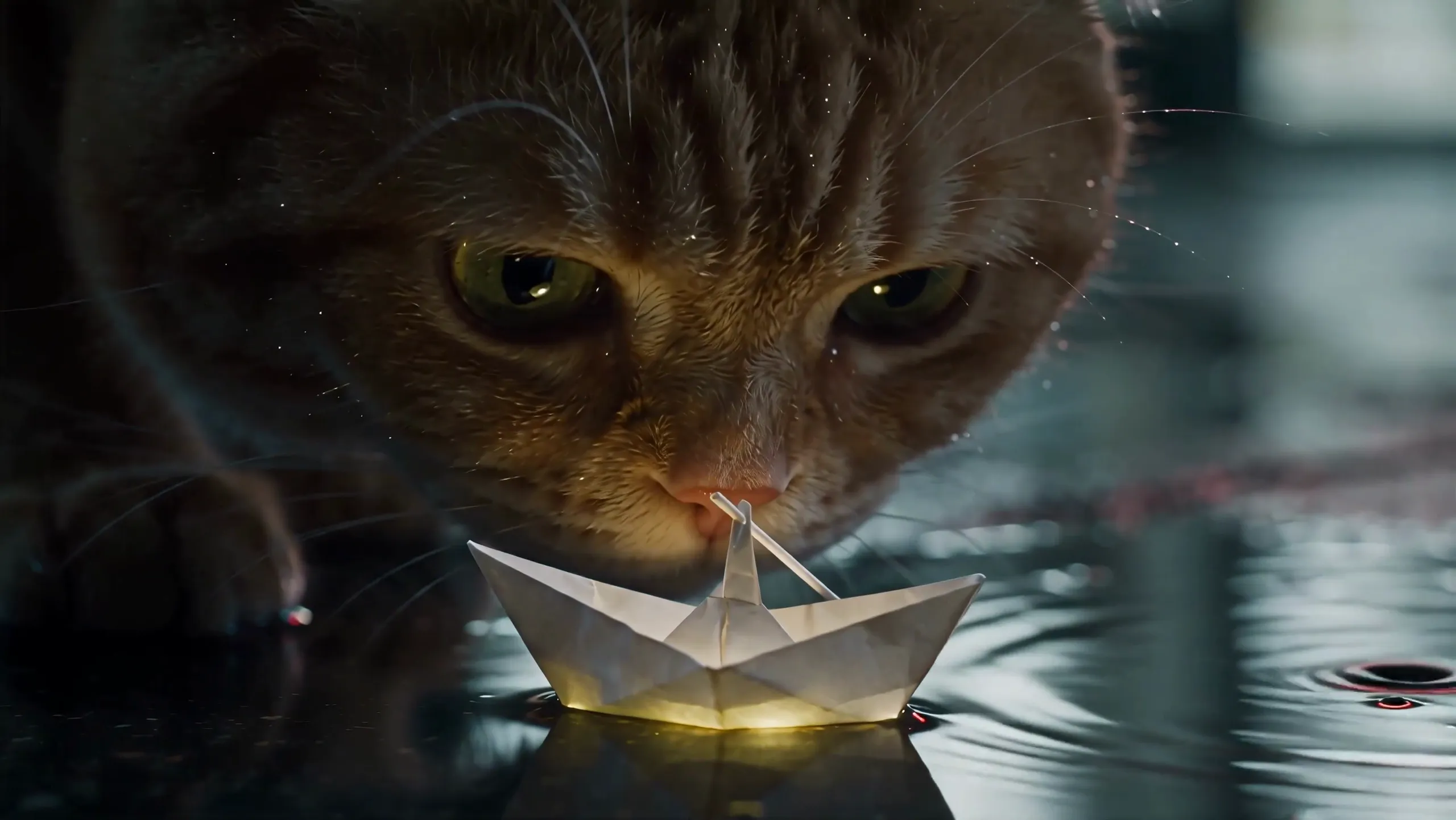
On a rainy night, an orange tabby with folded ears curls up against the glass of a convenience store. A paper boat comes over to play with him.
We made the story twice: a 45-second landscape film and a 46.5-second portrait film. Each ratio had its own storyboard compositions from the start.
Landscape film, 45 seconds. The embedded file is a 1792×1120 black-padded presentation copy; its three acts were edited from a provider-processed “2K” source measuring 3184×1792 at 60fps.
Portrait film, 46.5 seconds. The embedded file is a 1792×1120 black-padded presentation copy; its three acts were edited from a provider-processed “2K” source measuring 1792×3184 at 60fps.
The director—also our operations lead—later explained that the cat is already dead. The boat has come to take him. He never got to stay with two cats through the final part of their journey. The ruined box is there because the cat is still waiting. He stays beside it; he never climbs inside.
“The Cat and the Paper Boat” began as an idea Codex came up with during a production smoke test. We were checking whether the code it had just written actually worked. Then the operations team read the premise, short treatment, outline, and script, and decided to make the thing for real.
Three acts, then an entire production line
On the fuse main site, we produced a short storyboard for a film of about 45 seconds. Going from text to three acts took roughly three minutes.
It was a production smoke test. Every token we did not set on fire was a token saved. We used Kimi 2.6 for the text, including the prompt for the multi-panel storyboard.
| Act | What happens | Distance between the cat and the boat |
|---|---|---|
| Act 1, P01–P03 | The boat reaches the ruined box; the cat raises its head and tests the water with one paw | The cat withdraws its paw while the boat stays afloat |
| Act 2, P04–P06 | The boat retreats and returns, its warm glow becomes a visual focus, and it responds to ripples from the cat's paw | The cat's nose presses close to the boat's centre piece and oar |
| Act 3, P07–P08 | The boat rises beside the cat and leads it into the rainy street | The boat stays beside the cat as they leave |
Give the cat and boat a face before rewriting the prompt
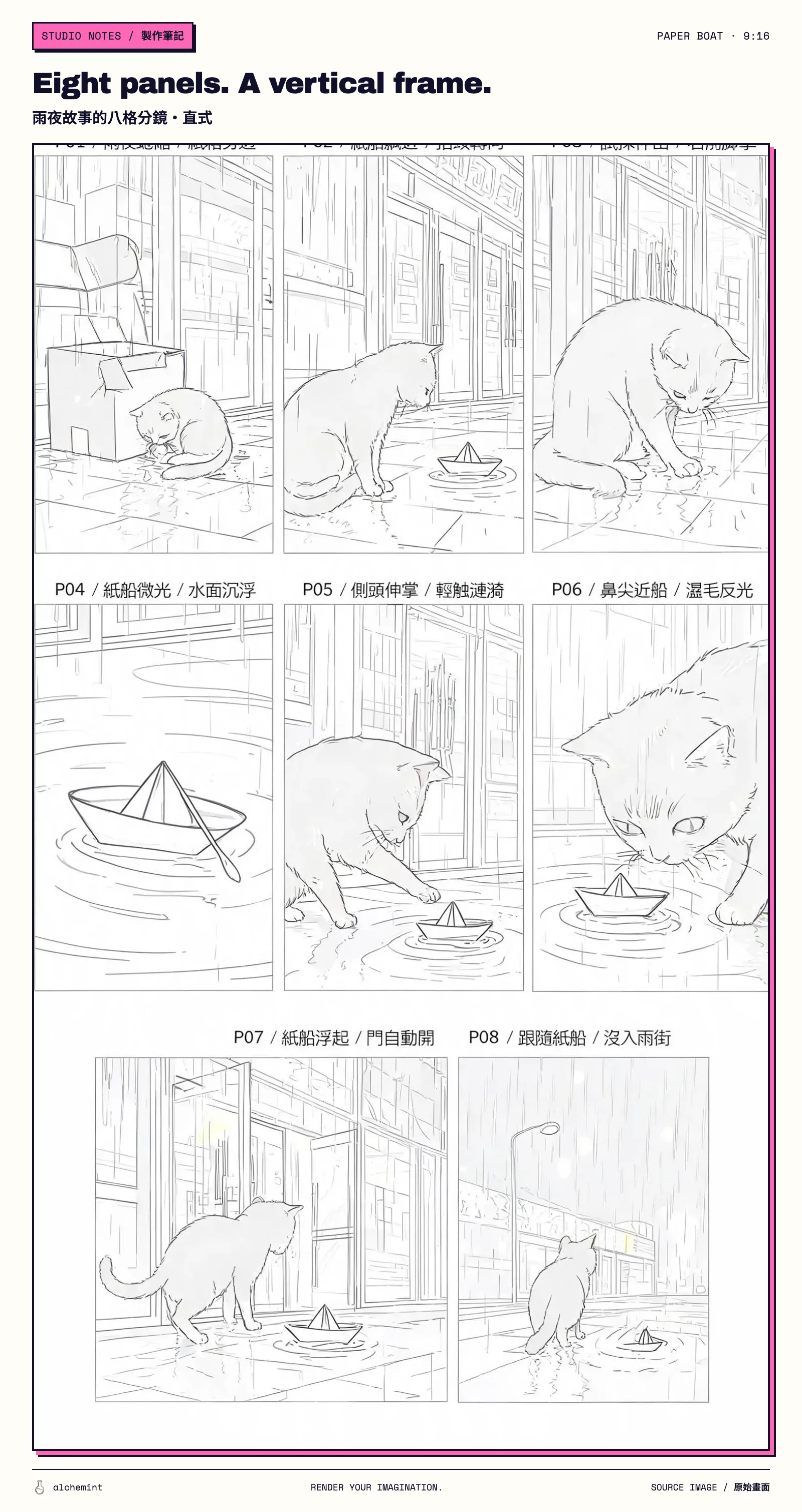
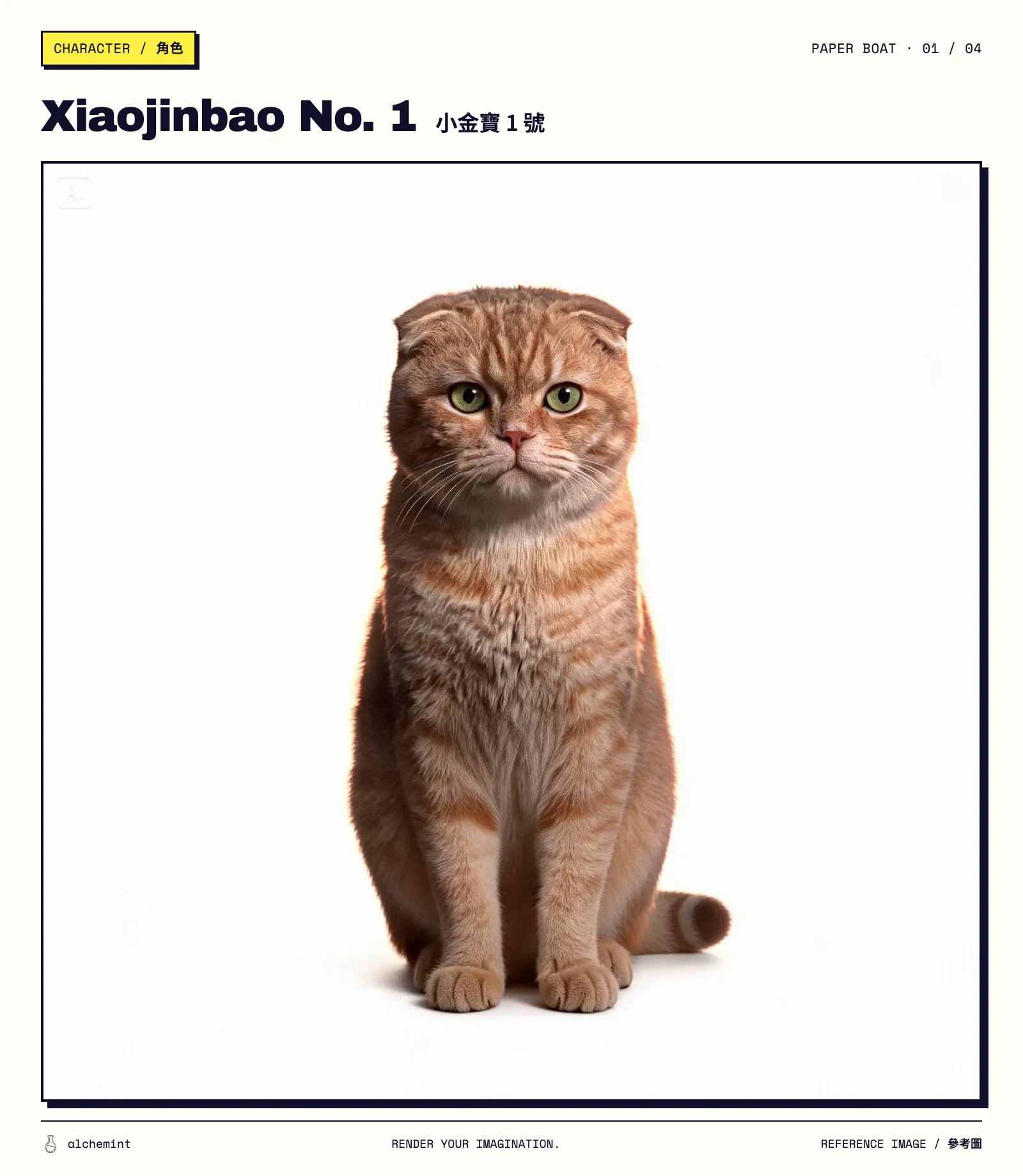
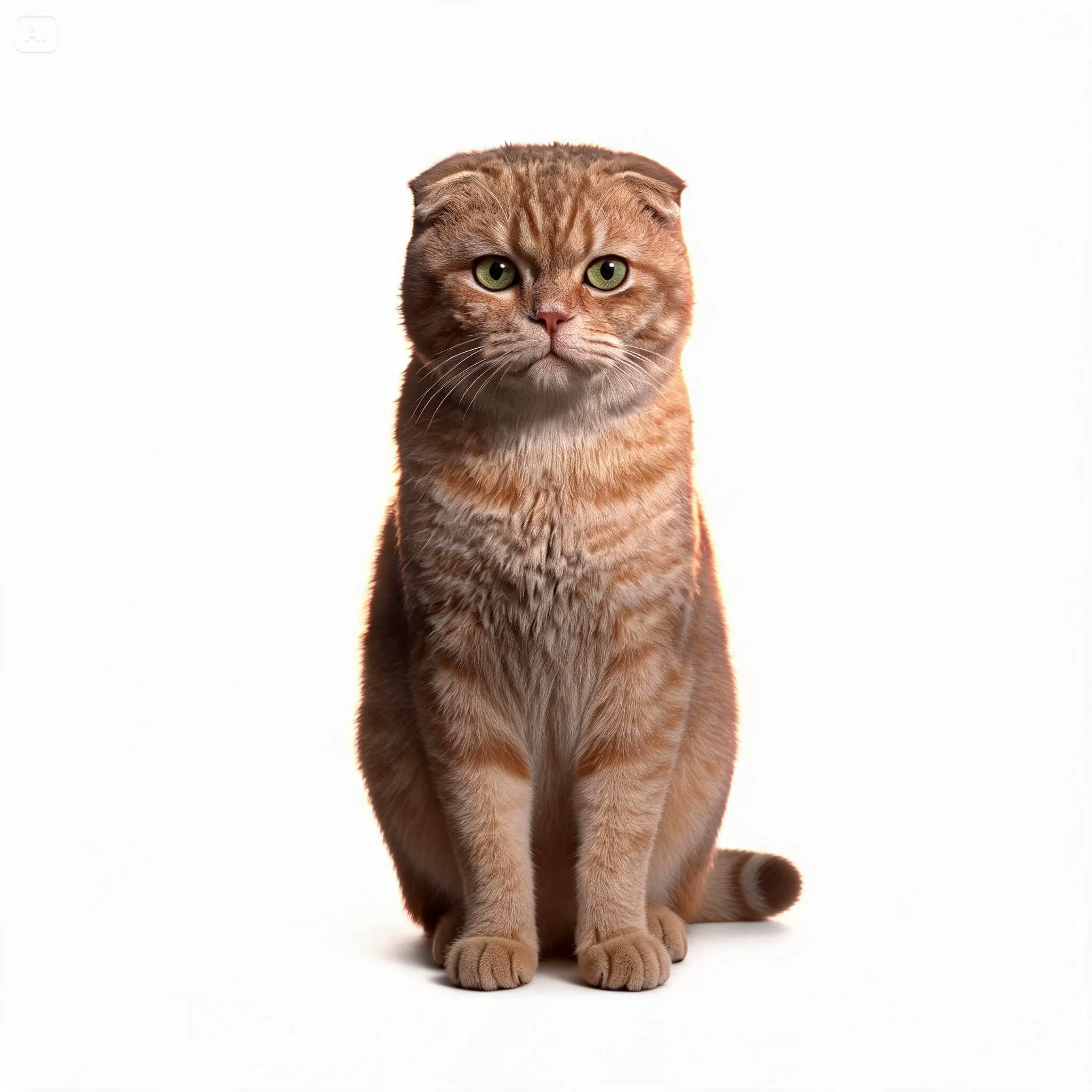
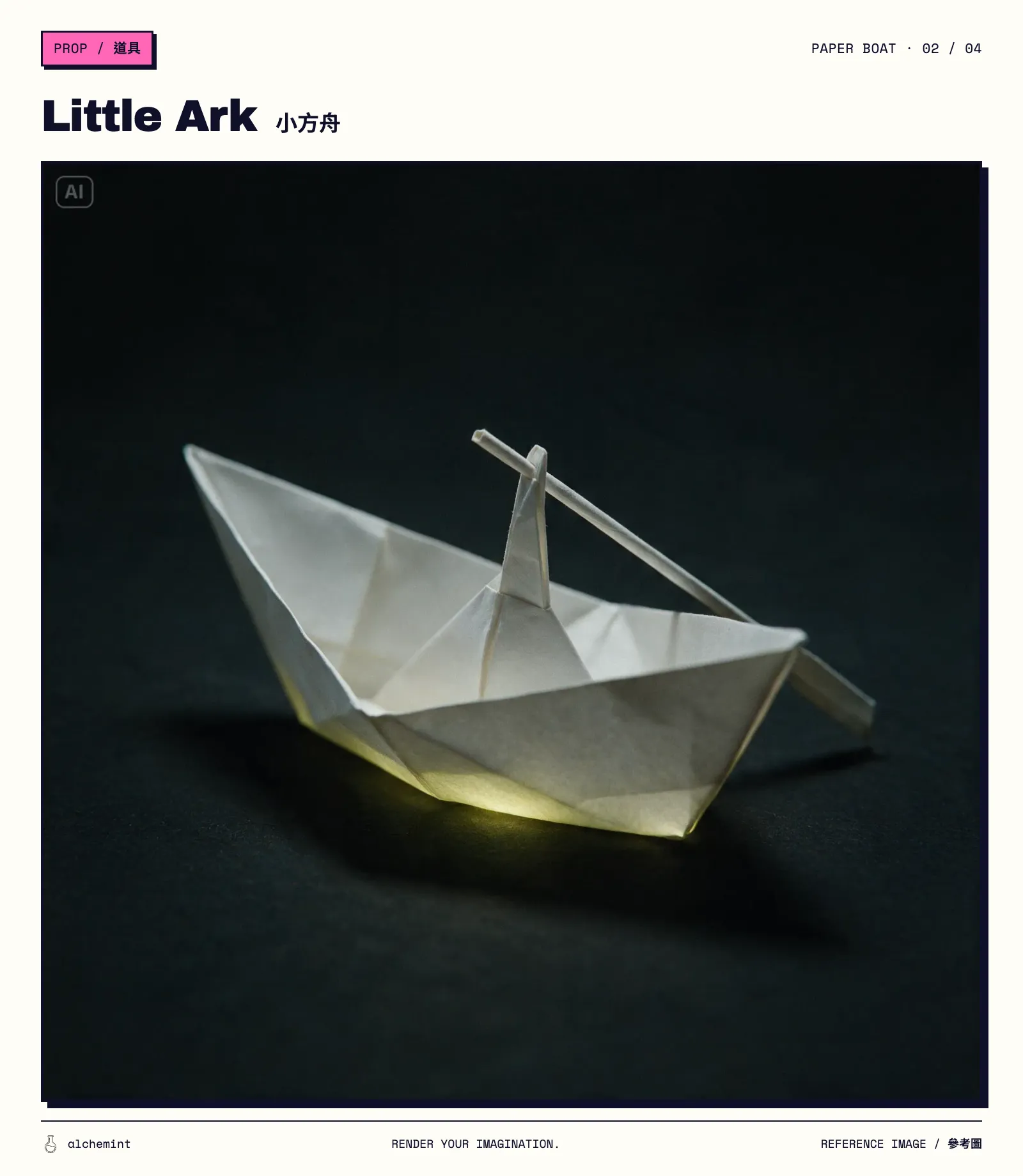
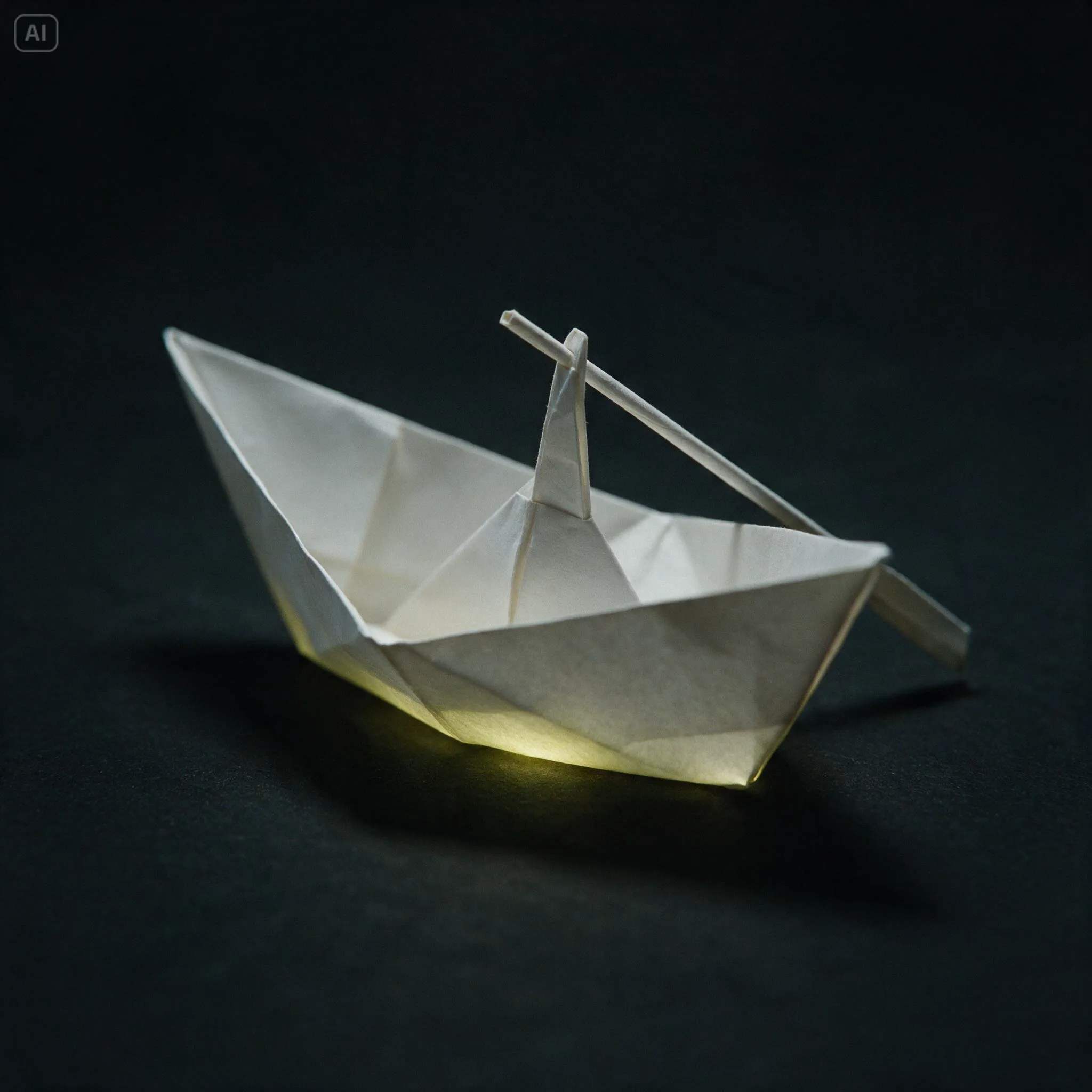
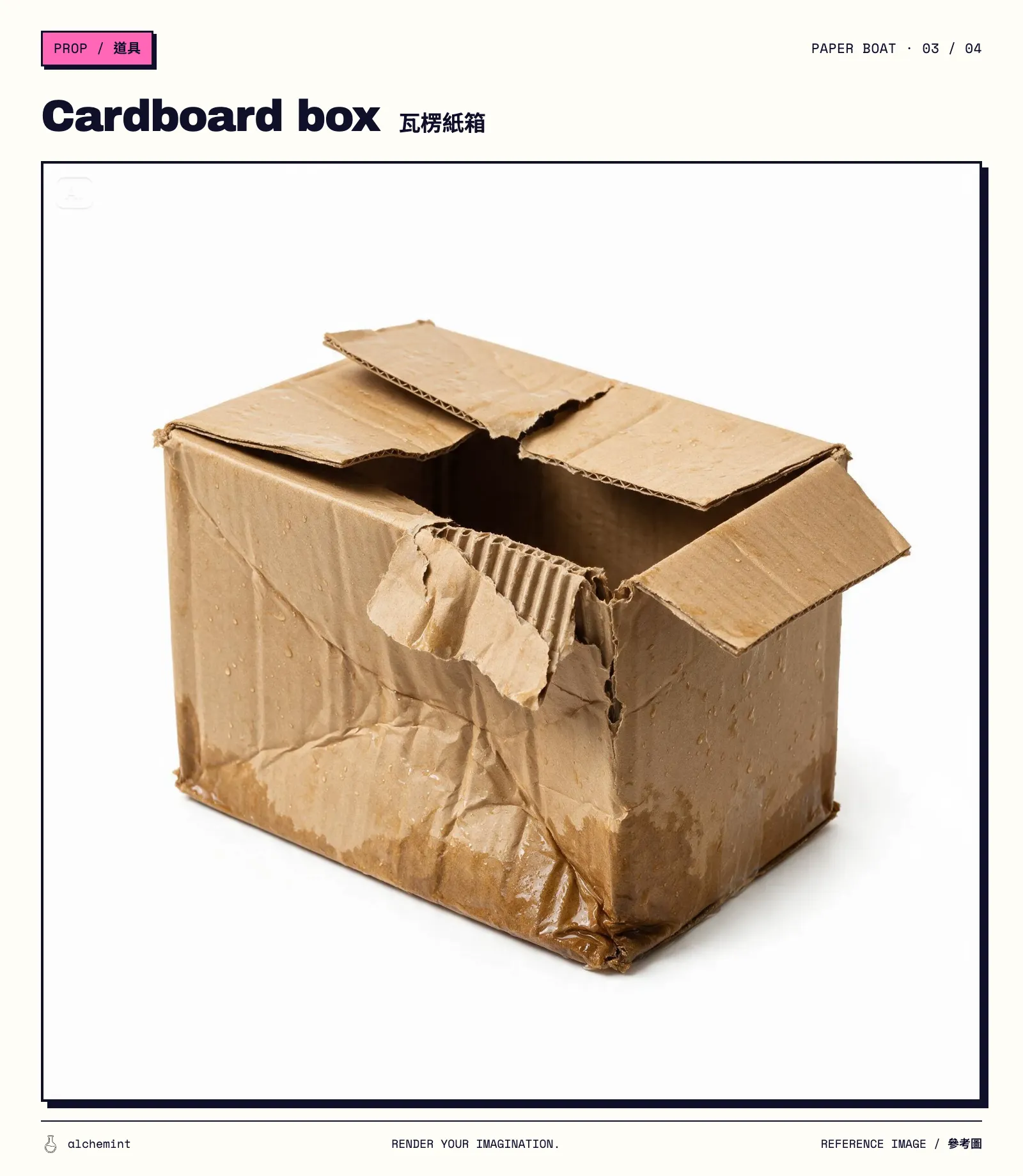
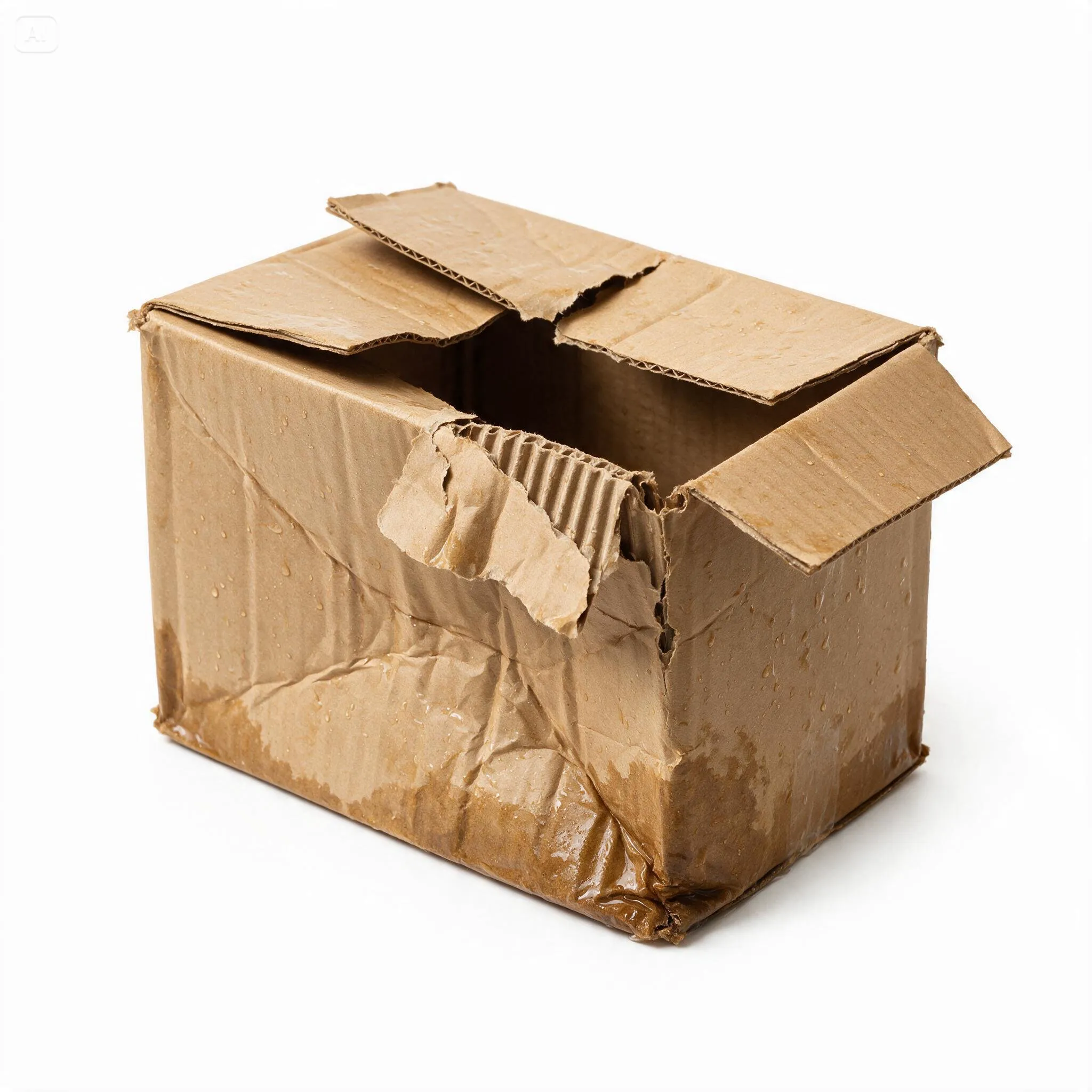
We used fuse to generate separate 16:9 and 9:16 eight-panel storyboards, plus reference images for the cat, paper boat, cardboard box, and convenience store. Once we saw what needed changing, we generated V3, V4, and V5.
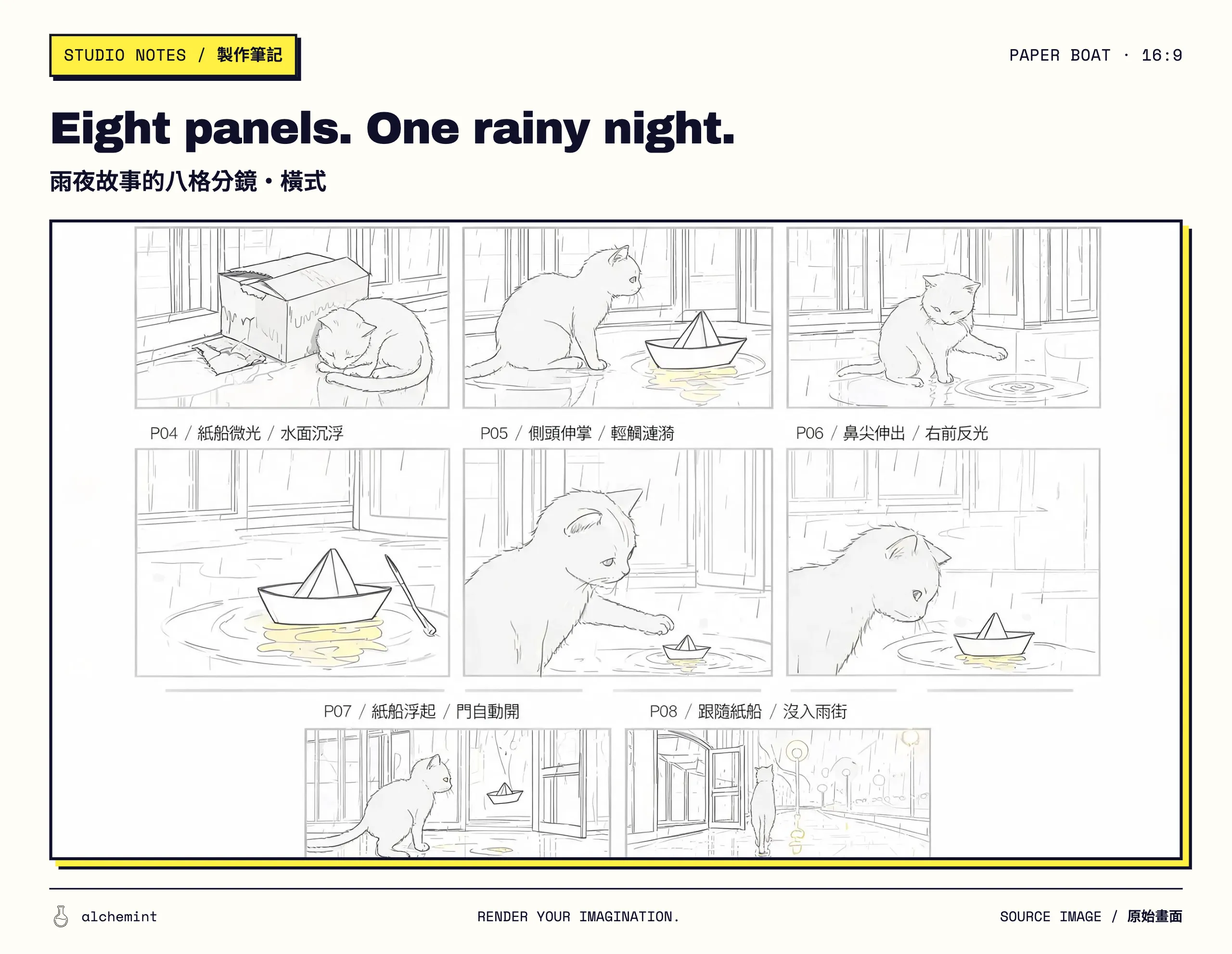
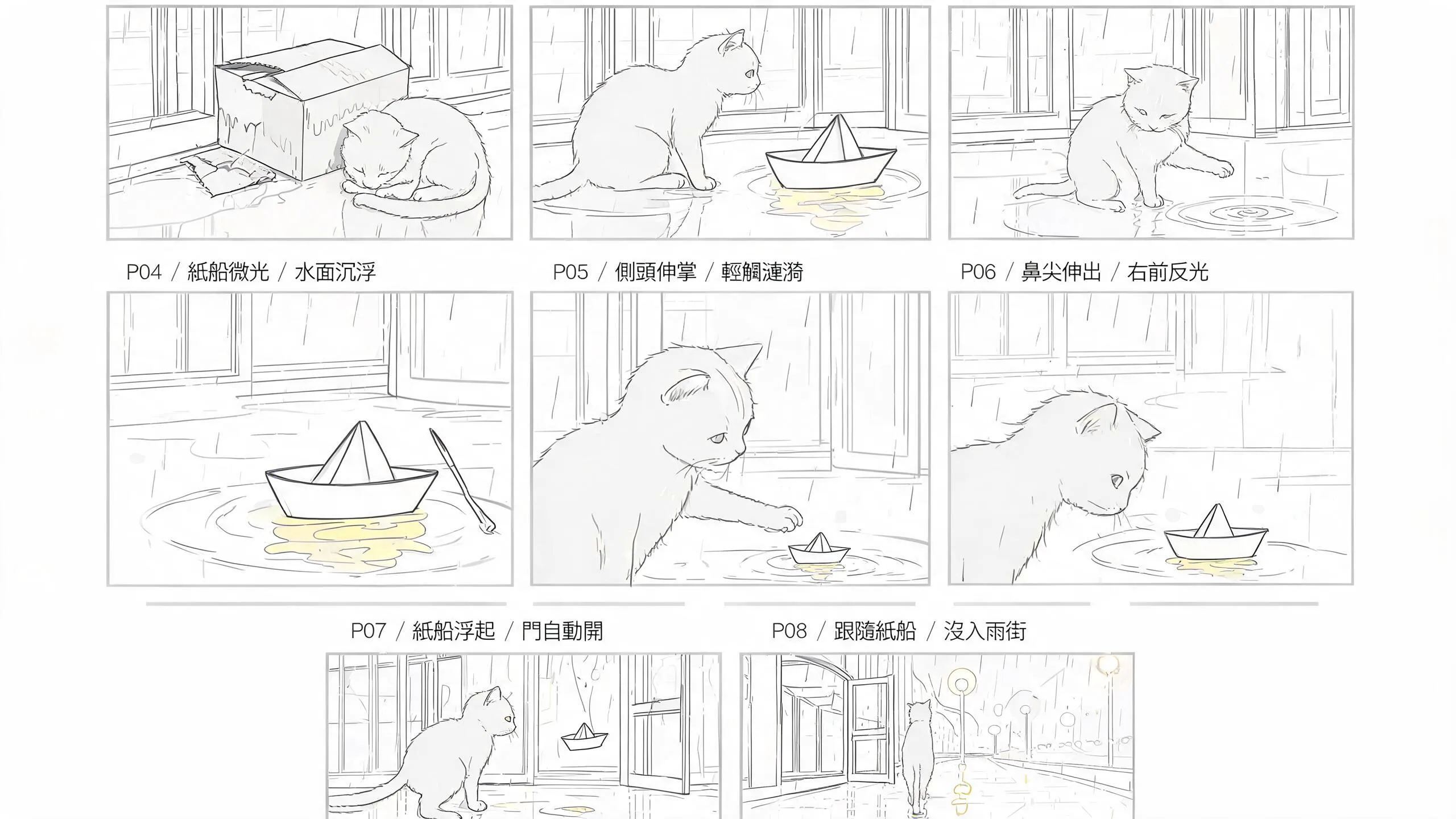
The formal 16:9 multi-panel storyboard generated with Seedream.
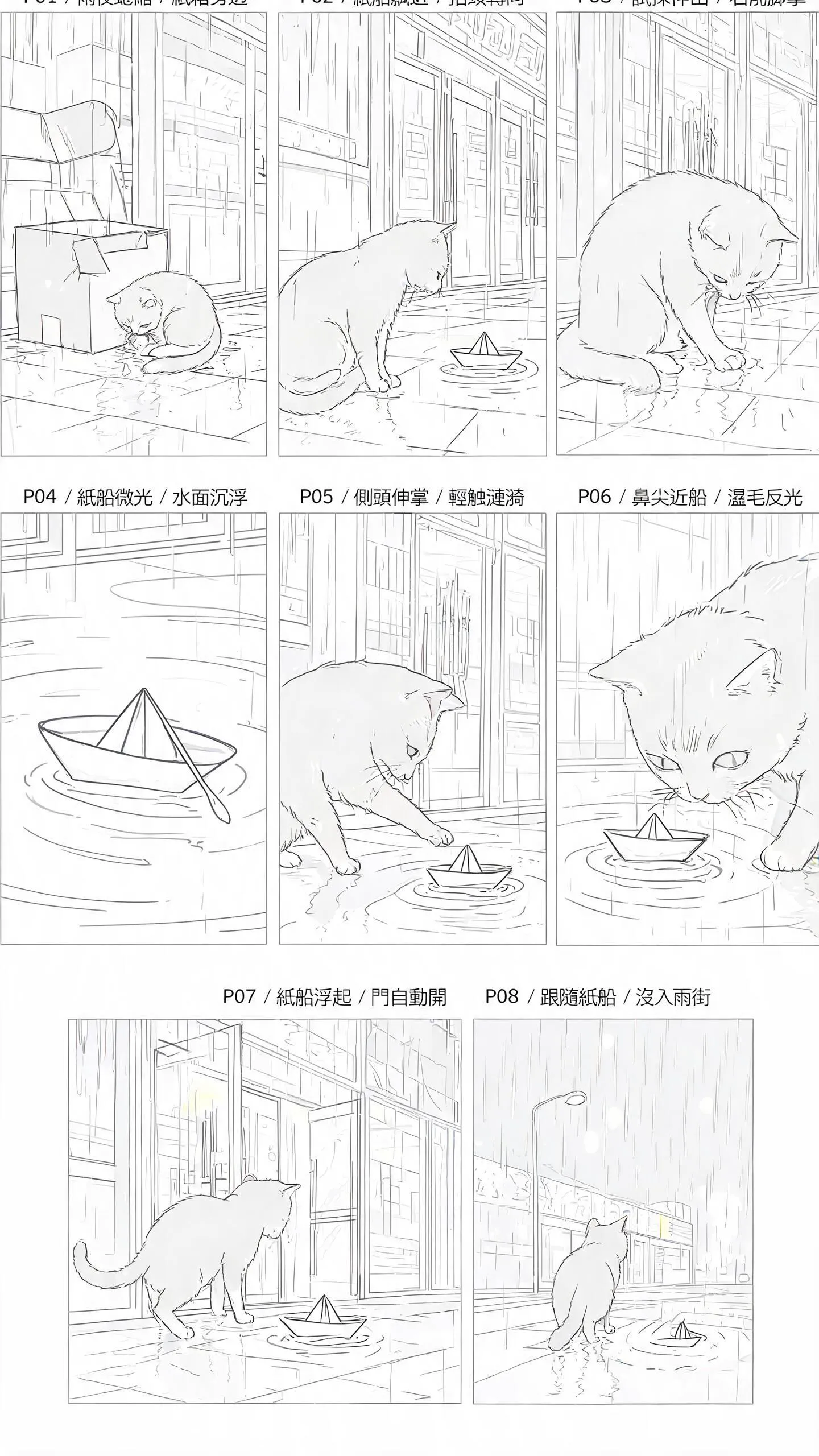
The formal 9:16 multi-panel storyboard generated with Seedream 5.0 Lite.
Cat: Xiaojinbao No. 1
Paper boat: Little Ark
Cardboard box
Scene: corner convenience store
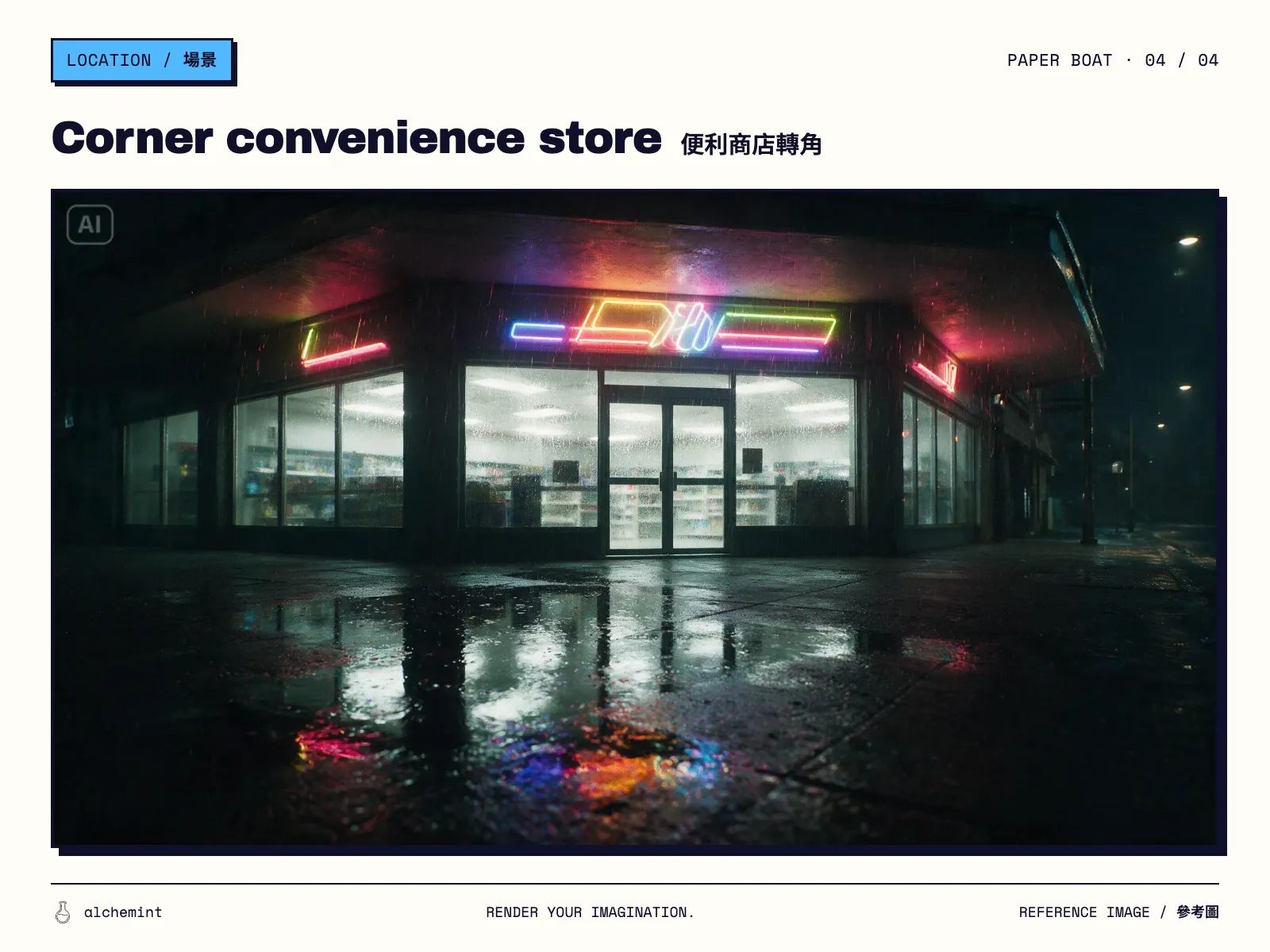
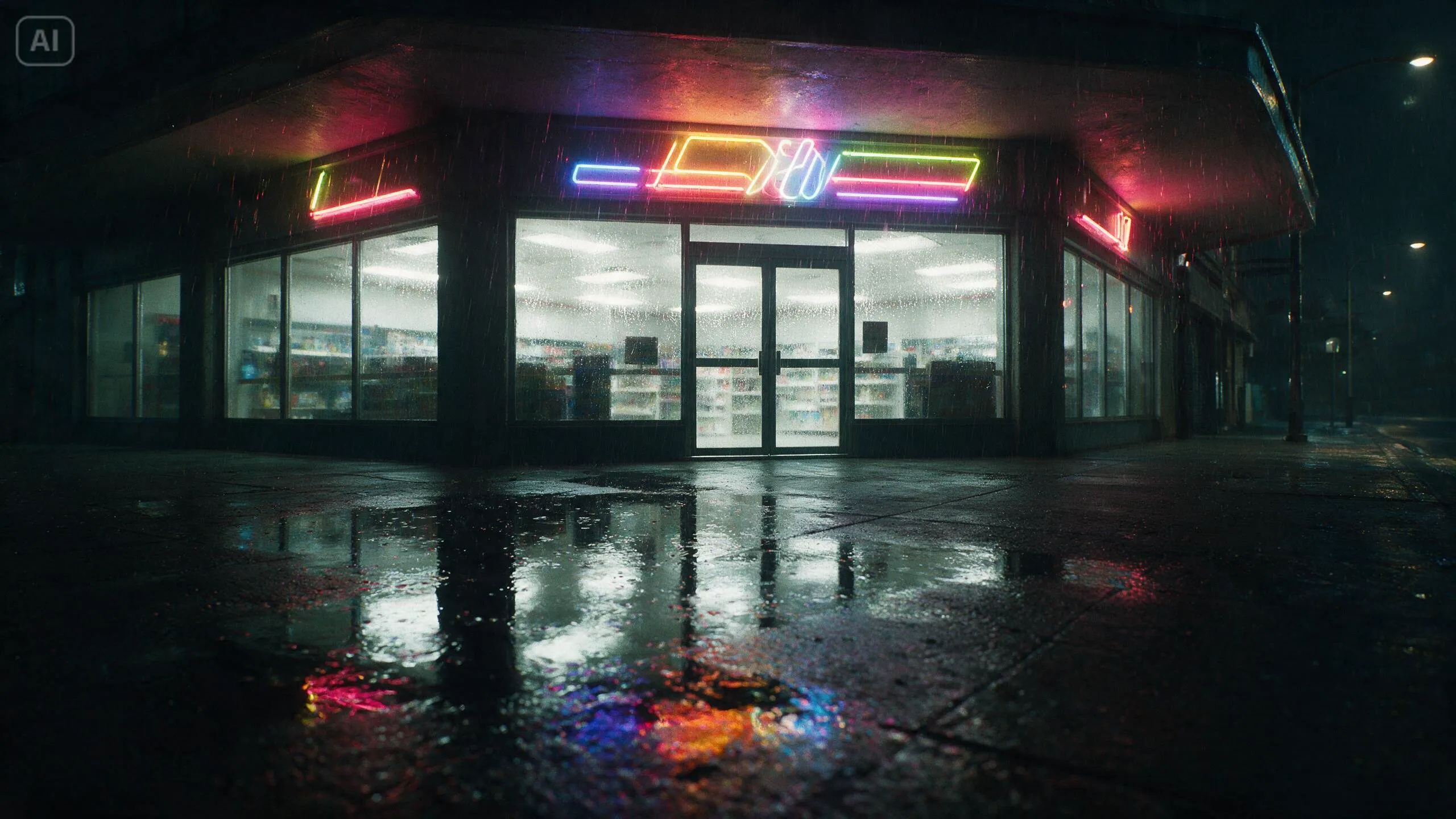
The story came from our operations lead's own life. At the art desk, all he really did was use Kimi 2.6 inside fuse to draft the art-direction prompts, then let Seedream 5.0 Lite generate the reference images.
A Blender previz let the boat fly before the final generation
Before the final video generations, we handed the job to the Claude desktop app and had it operate Blender through Blender MCP. The instruction was not what anyone would call responsible:
Hey, this is the prompt I am about to submit. Can you rough out a Blender file from what it describes so I can take a look? You do not need an actual cat. I just want to see it. You know what I mean?
The Chinese working prompt used for the previz appears below that message. It was one of the versions we were preparing to submit. The later revisions are covered in Seedance 2.5 Prompt Test: We Wrote Too Much and Confused the Camera.
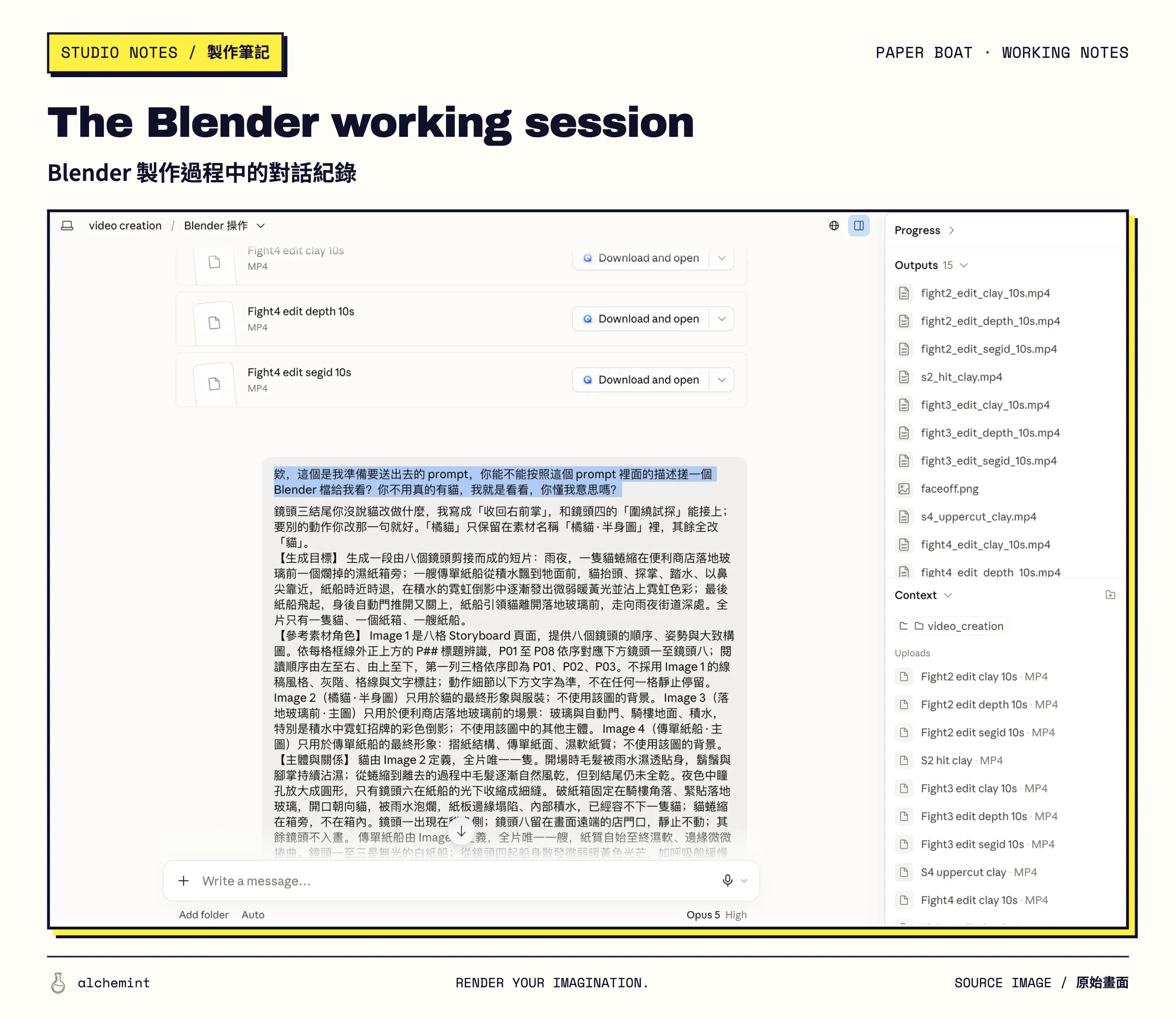
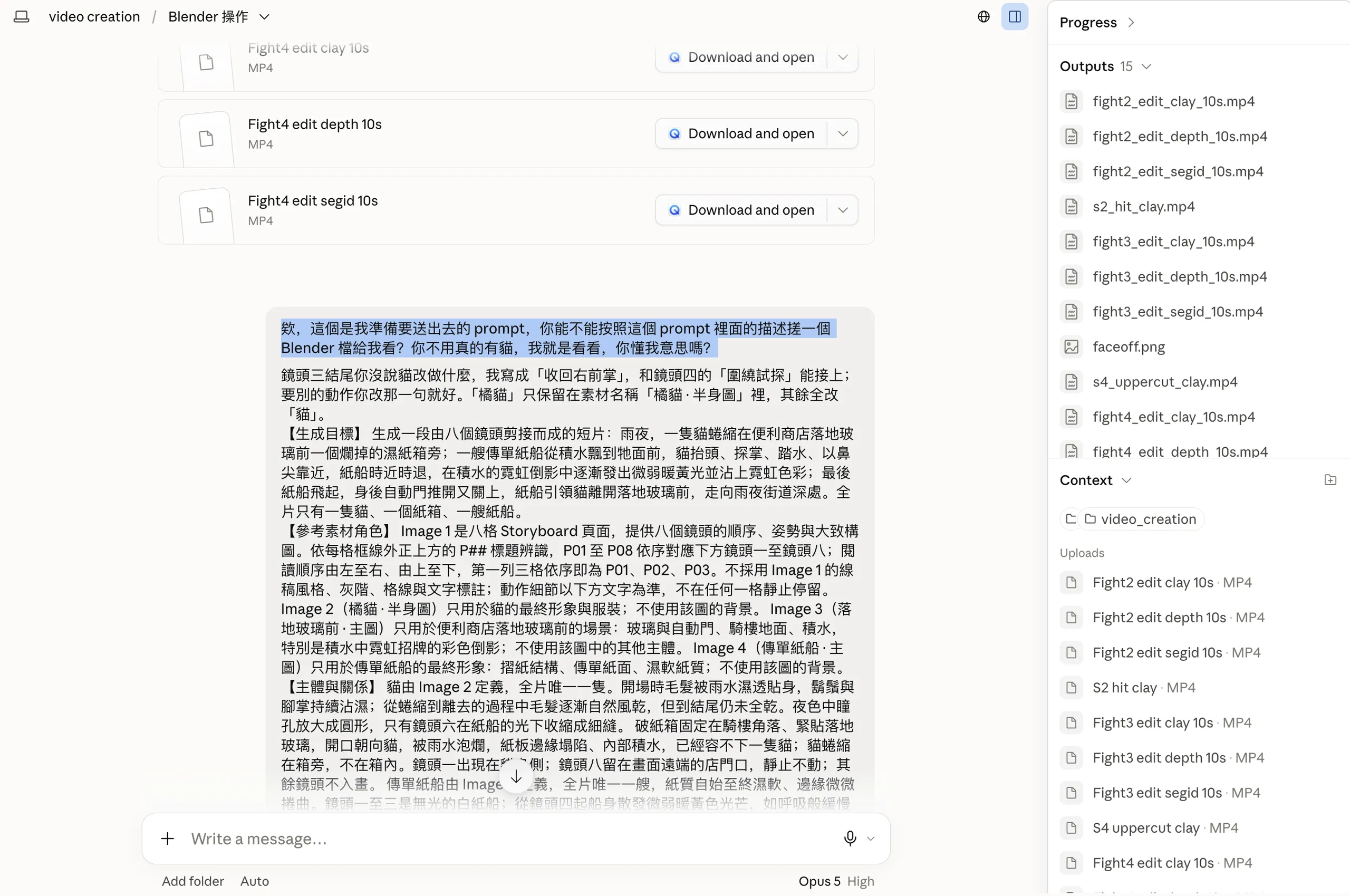
The actual Claude desktop handoff. The centre shows our very casual Blender request, Claude's P03/P04 continuity notes, and the Chinese working prompt used for the previz. The right sidebar still contains the fight-scene camera tests that were already in progress.
Putting all eight cameras in one space exposed the paw direction, the boat's path out of the water, and the final exit in a single run. The previz produced clay and segmentation-ID videos plus board_2x4.png. They checked blocking before submission. Nobody was pitching a grey 3D cat as the final look.
Blender is not normally part of this workflow. After hundreds of cat generations, our practical conclusion for this kind of job is simple:
A multi-panel storyboard plus Seedance is enough to
satisfy the bossdo the job.
Then we suddenly felt the need to spend a few more of the boss's tokens. Kidding. We were already using Blender to design camera moves for fight scenes and trying to make impact and weight repeatable. The cat-and-paper-boat job landed right in the middle of that experiment.
To check the camera positions and movement described in a prompt, having Claude rough it out in Blender can help.
30-second Blender clay previz; the original 1920×1080, 24fps frame is preserved inside the Article player's 16:10 presentation frame.
Segmentation-ID output of the same 30-second previz, using flat colors to separate object groups; 24fps with no audio track.
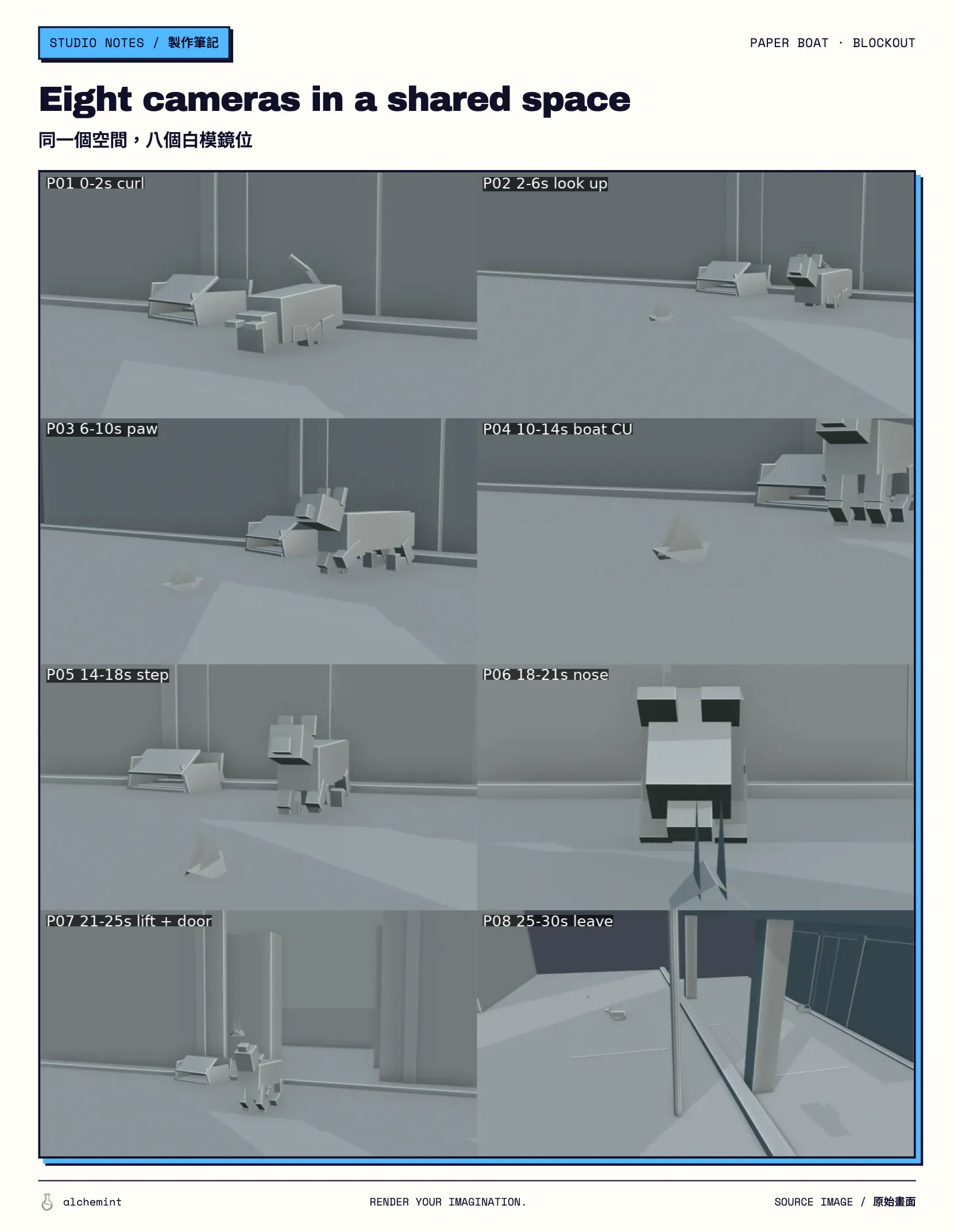
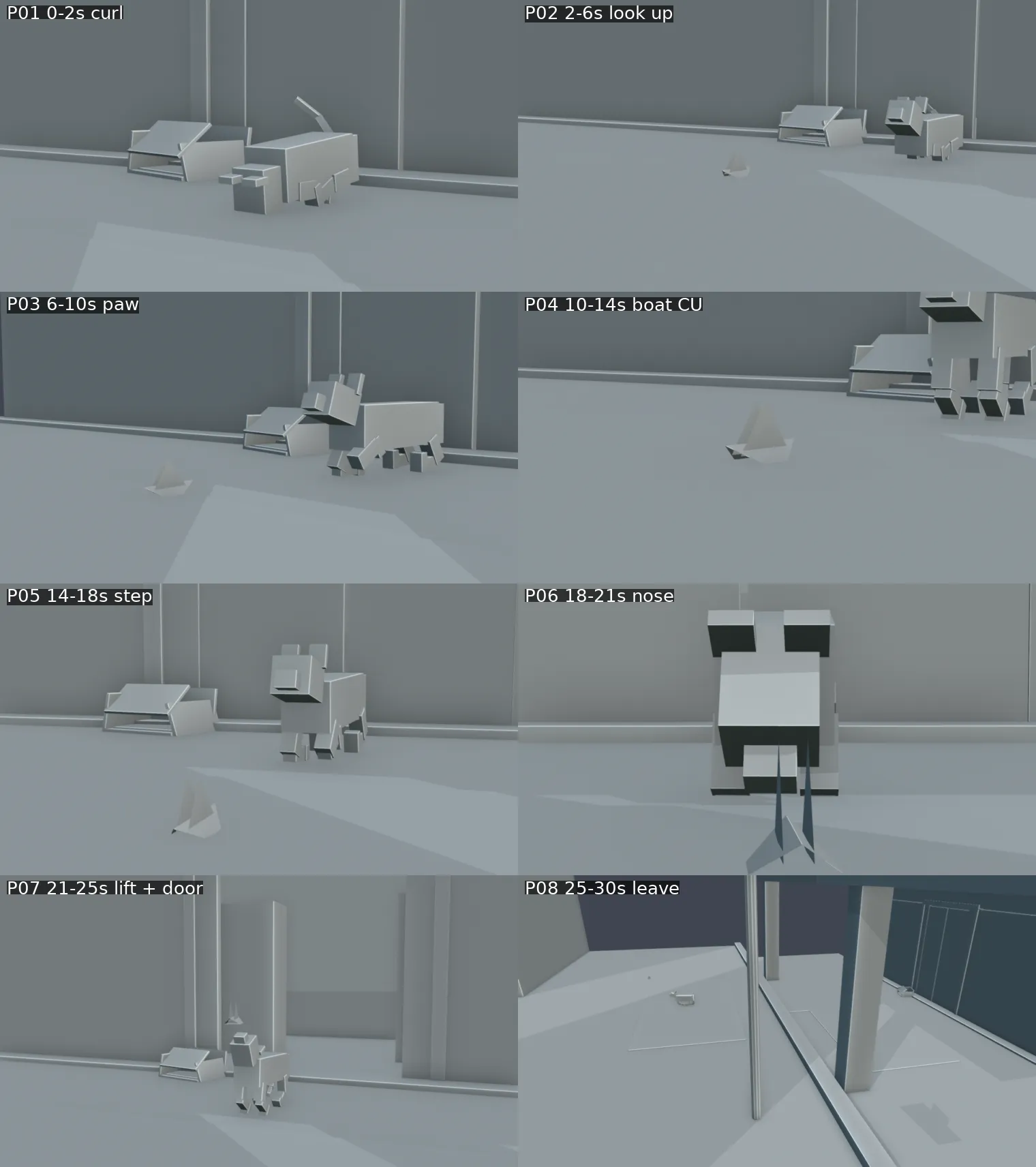
board_2x4.png places P01–P08 in one 3D space to check blocking, direction and the final exit. Full-size panels are included in the Blender article.
The eight cameras, clay render, segmentation-ID render and 2x4 board are covered in AI Video Previsualization: We Built a Box Cat in Blender.
Three Act prompts, with no room for invisible feelings
Before submission, we reread ByteDance's Seedance 2.5 Prompt Skill and used sd25-pe to organise three Act prompts. Each one served a landscape and portrait submission, giving six submissions total. The Skill helped organise the story and references into the text and assets we sent to Seedance.
The first draft had two hard collisions. It demanded “one uninterrupted continuous shot,” then called for locked cameras, tracking shots, different shot sizes, and later acts that plainly needed cuts. Its Act 1 continuity block also spoiled P07 and P08 by mentioning the opening door, flying boat, and final departure. Before submitting to Seedance, we cleaned up each act and kept later events off the early pages.
All six submissions used the same spine: generation goal, reference-asset roles, subjects and relationships, event script, consistency, then visual style and sound. The full prompts are long. The three passages below are the core Act sections shared by landscape and portrait, taken from the versions we actually submitted.
Translation note: Our operations team is based in Taiwan, and the prompts actually submitted for this project were written in Chinese. The English passages below are translations provided for readers. These translated versions were not submitted to Seedance or tested, and we do not guarantee equivalent results. The films in this article came from the original Chinese prompts. If you try these translations, validate them with your own references and settings.
Act 1: P01–P03, the boat's first approach (shared by both ratios)
Generation goal: Generate a sequence edited from three shots. On a rainy night, one cat curls beside a ruined wet cardboard box outside the floor-to-ceiling glass of a convenience store. A white paper boat drifts across the puddle toward the cat. The cat raises its head to watch, turns sideways, and extends its right forepaw to test the water. The boat moves back slightly and rocks once or twice.
Act 2: P04–P06, the boat responds (shared by both ratios)
Generation goal: Generate a sequence edited from three shots. In the puddle outside the convenience store at night, one white paper boat repeatedly approaches and retreats from the cat, always staying beyond its reach, as a faint warm-yellow light gradually appears beneath the boat. After tilting its head and hesitating, the cat steps lightly into the water with one forepaw. Ripples travel toward the boat. Finally, the cat lowers its head until its nose almost reaches the boat, and its pupils contract slightly in response to the boat's glow.
Act 3: P07–P08, the boat leads the cat away (shared by both ratios)
Generation goal: Generate a sequence edited from two shots. The white paper boat, glowing with neon-coloured light, slowly rises from the puddle in front of the cat's nose and circles the cat once in midair. The automatic door behind the cat opens outwards, but nobody comes out. The door then closes slowly as the boat drifts into the rainy street. The cat follows it, and both gradually become smaller among the streetlights and falling rain.
“I am the boat” never entered the prompt. The screen only needed behaviour: the boat retreats when the cat approaches and returns when the cat pauses. We left the cat's death unspoken too, carrying it through the ruined box, gradually drying fur, unattended doorway, and final departure. The Seedance 2.0 guide covers the earlier structure; Seedance 2.5 Prompt Skill: Every Reference Needs a Job covers the new rules; and Seedance 2.5 Prompt Test: We Wrote Too Much and Confused the Camera shows each change in this project.
We drew eight storyboard panels. All eight made it on screen
We extracted final-film frames with FFmpeg and placed every formal storyboard panel beside its match. P01–P08 appear in both ratios. Landscape P07 and P08 hold onto action, direction, and the meaning of departure; portrait keeps more of the original composition. The board was clearly in the room. Seedance still cut to its own rhythm.
The Act 2 tail frame also became Act 3's first-frame reference for the same ratio. The raw tail frame, Act 3's first decoded frame and the frame pair used in the final edit are three separate sets of images. The landscape edit joins at 26.983 to 27.000 seconds, and the portrait edit joins at 28.483 to 28.500 seconds.
We also put the seam checks and FFmpeg scripts we learned the hard way into the public Curtoom video-clip-stitching skill. It checks the source clips and effective frame rate first, separates a new camera angle from a matched composition or genuine overlap, then decides whether the join needs a hard cut, a slow-start trim or a short dissolve.
The submitted 16:9 and 9:16 grids, every panel-to-film comparison, first-frame handoff and final joins are collected in Does Seedance 2.5 Read Storyboards? We Found All 8 Panels.
The door may be open in one frame and closed in another. An action may land half a second early or late. The boat still takes the cat in the intended direction, so we kept those variations. A frame-perfect reshoot would have removed accidents we actually liked.
One story, two aspect ratios, two different goodbyes
We generated three Acts for each ratio, inspected them first as 480p previews, and then selected the cuts. All six submissions passed on the first generation. By the time I submitted each prompt, the story, characters, positions, and shots were already close to what I wanted.
| Version | Final length | P07/P08 treatment | Final frame |
|---|---|---|---|
| Landscape | 45 seconds | The wider storefront and street establish the departure direction | The film holds on the empty storefront after the cat and boat leave |
| Portrait | 46.5 seconds | The door, cat, and rising boat form a stronger line into depth | The cat and boat remain visible far down the rainy street |
Each ratio had its own storyboard and three submissions, and each found a different exit. The final landscape file is 3184×1792; portrait is 1792×3184. Both run at 60fps. “2K” is the provider's processing-tier label here.
Did the paper boat come back for the cat?
Every version faced the same test: does the boat look playful, or does it look as if it came back for the cat? The folded ears, the small jump at an Act boundary, and the door's final state only became editorial choices once the images existed.
The boss wanted Ops to ship. What the boss wants, the boss gets. Our operations lead missed his cats. He got a film, too.
The cat in that film is not alone anymore.