"With AI, you too can be a director." A year ago that sentence was called vibe coding
"Make AI video" and "make video with AI" are one thing to the search engine, the keyword databases and the AI summary. The ads sell the title of director; the product delivers eight seconds.
On 25 August 2026 we searched "create video with AI" on the US version of the search engine. The AI summary opened with:
You can create an AI video by entering a text prompt or uploading a reference image into an AI generation tool…
We asked how to make a video with AI. The answer was about making an AI video. The preposition was eaten in the first sentence.
The same day, a keyword database filed "make video with AI", "make a video with AI" and "how to make a video with AI" under one parent term: "make AI videos". Nine of the ten organic results carried the title "AI Video Generator". Three unrelated systems, one verdict: how you ask does not matter, the answer was ready before you typed.
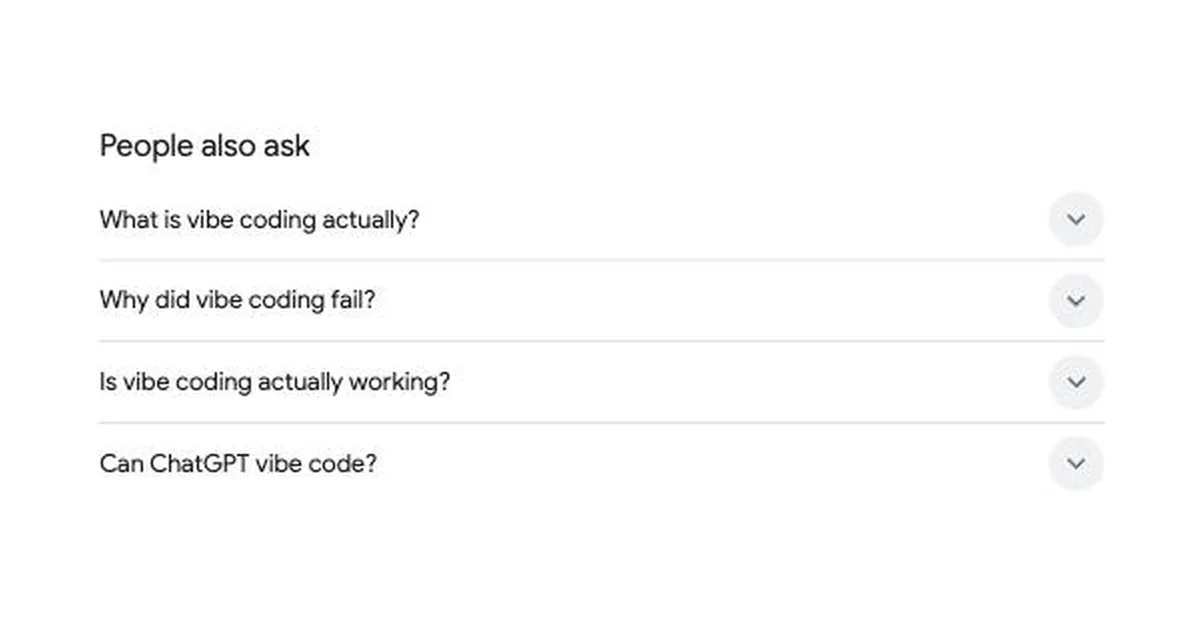
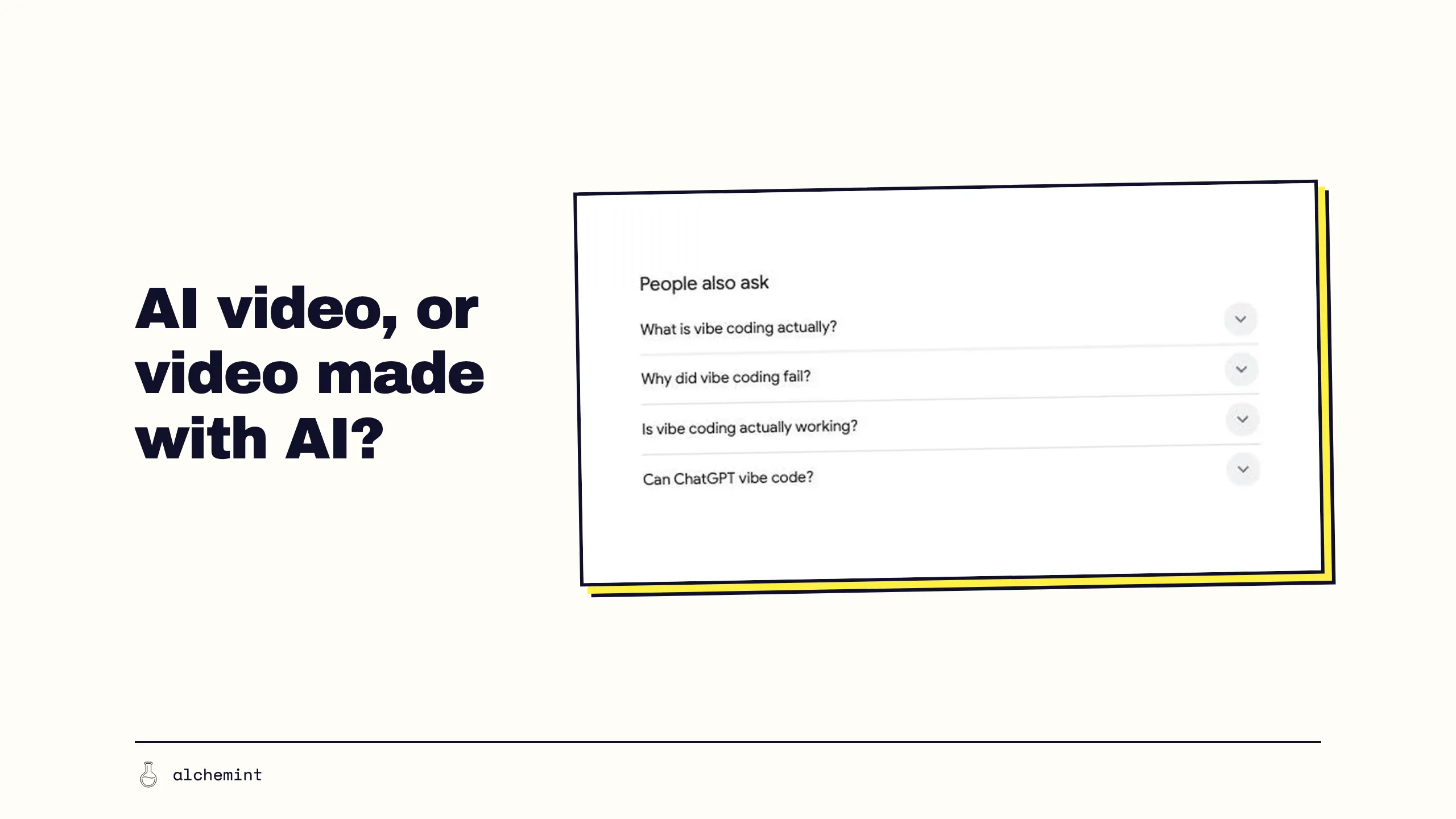
A year ago there was an identical sentence: "with AI, you too can be an engineer". The word for it was vibe coding. On its results page today, the second question under "People also ask" is "Why did vibe coding fail?".
The search engine cannot tell "with AI" from "AI video", because nobody cares
Volume first. US monthly searches, 25 August 2026, two databases side by side. They often disagree on the same term; we do not average them.
| Search term | SE Ranking | DataForSEO |
|---|---|---|
| how to make ai videos | 9,900 | 12,100 |
| make ai video | 6,600 | 6,600 |
| create ai video | 5,700 | 6,600 |
| how to make a video with ai | 260 | 210 |
| make a video with ai | 390 | 390 |
| make video with ai | 10 | 720 |
| how to create videos with ai | 480 | 480 |
Put AI in front of video as an adjective and you get twenty to fifty times the searches of putting it after "with" as a tool. That part is fair enough; language picks the shorter form.
The next three facts are less fair.
Among the seven queries were "ai video generator", "make ai video", "create video with ai", "create a video with ai", "make a video with ai", "generate video with ai". Lay out the top ten for each and seven URLs appear in all seven lists. By the threshold we use ourselves, five shared URLs means one search intent. Seven.
The AI summary rewrites the question by itself. Search "create video with AI" and it says "You can create an AI video by…". Search "make a video with AI" and it says "You can create a video with AI by writing a text prompt…". The phrasings swap freely and the steps that follow are identical: choose a tool, write a prompt, adjust settings, generate, export. Those steps work for any product category on earth. They describe a checkout flow.
The database's intent classifier cannot separate them either. "Create" terms get labelled transactional, "make" terms informational, regardless of whether "with AI" is in the sentence. The only word that changes the results page is "how to".
Add "how to" and the top ten gives up four or five slots to tutorials. We read those eleven pages one by one: six have a title of the form "How to Make AI Videos"; of nine tutorials, four list "write a script" as a step and one lists a storyboard. One page has the title "How to Make AI Videos in 2025" and the heading "How to make videos using AI". Same page. The author does not care, so why would the search engine.
What the landing pages call "AI video": eight seconds for one sentence
Top ten for "ai video generator", ten landing pages, read in full. Five state a definition, and the shared elements are three: text in, optionally one image, a clip out. The selling point is one, phrased four ways: "Instead of filming with a physical camera", "no filming or manual editing needed", "skipping traditional filming and post-production entirely", "without the need for expensive equipment, actors, or even video editing skills".
Read what those four sentences are selling. They sell removal: remove the shoot, remove the edit, remove the actors, remove the skill. A product lists the entire craft as the things it saves you from, and marketing writes "you too can be a director" on top. What is left of the director's job once those are removed? Typing.
Length, verbatim: "up to eight seconds… One video is generated per prompt", "clips up to 8 with some allowing up to 15 seconds", "Single generations are short clips". A review site's spec table says five seconds, eight seconds, five to ten. The pitch on these pages comes down to eight seconds for one sentence. The question "how to make a video" is being answered with "how to buy eight seconds".
Three different things are stuffed under the one term. An explainer and a review each split "AI video generator" into three classes: engines that generate clips, platforms that make a virtual presenter read a script, and template editors. The explainer says it outright: "A Sora-generated cinematic clip and an AI avatar delivering a compliance briefing share almost nothing in common." Three unrelated products, shuffled through the top ten, every page calling itself an AI video generator.
Among the engine pages, the remaining differences are two: the model list and the free quota. The queries rising alongside the category term in search trends are those model names. A review site's editor's note at the end of June says Sora was discontinued in March; on 25 August, four of the ten pages still list Sora 2. The landing pages have not updated which engines they sell. The titles get handed out promptly.
The tutorials teach you to press a button
The eleven pages that win the "how to" slots are mostly brand blogs. The flow is uniform: decide the purpose, choose a tool, prepare the input, generate, edit, export. That is a product onboarding guide. Four of nine make the script a formal step, one makes the storyboard a step, three start straight from the prompt, and one replaces the script with a "creative brief", a word whose meaning is that you do not write a script.
The one page that teaches storyboarding has a line everyone should read: "Stop Thinking "Prompts." Start Thinking "Shots."" It ranks on page four.
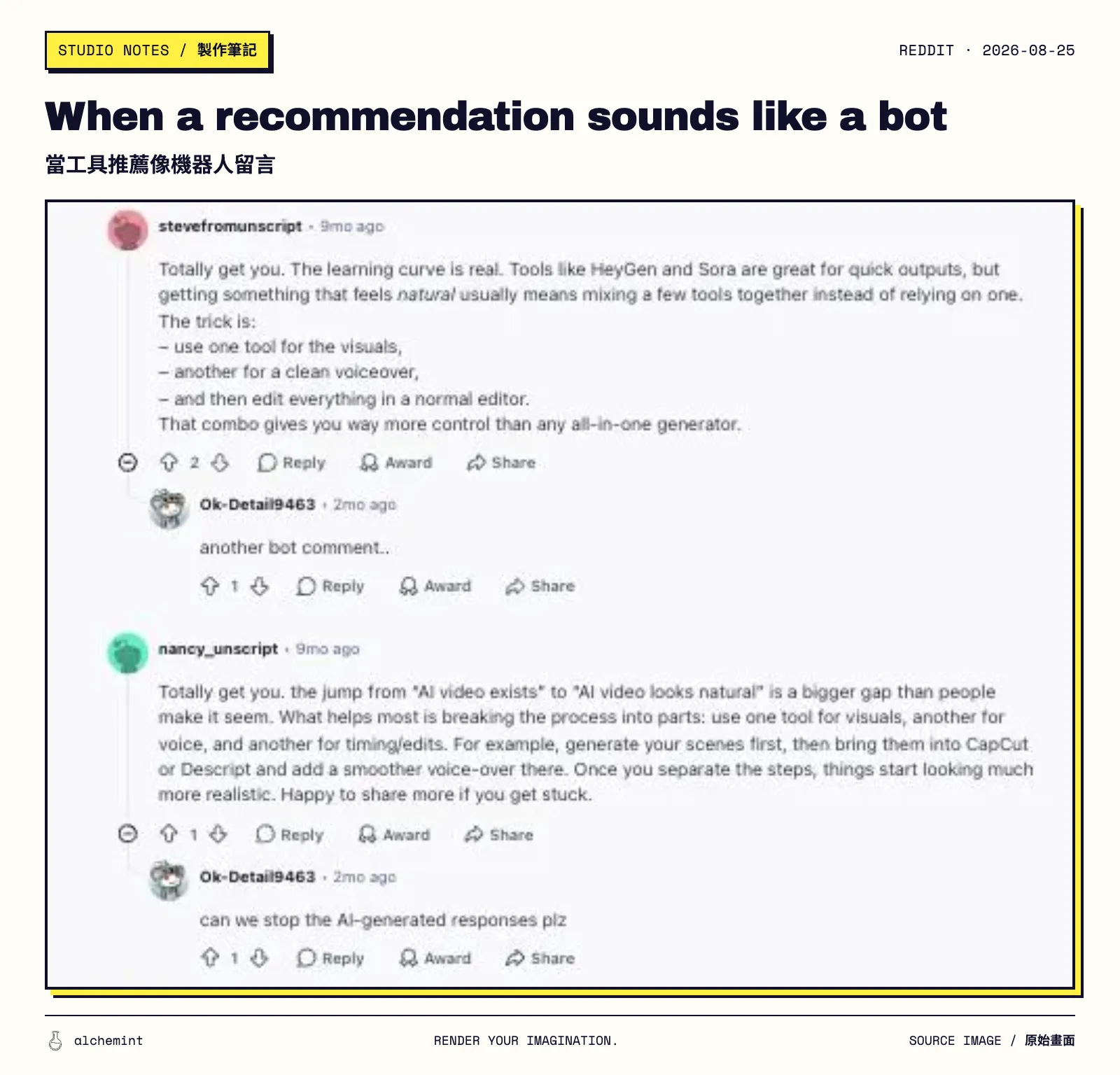
The forums. Someone asked how to make a marketing video that feels natural; in the same thread, two complaints: "another bot comment.." and "can we stop the AI-generated responses plz". On the Q and A site, thirty-two answers, one of which answers the question; the rest are tool promotions that drifted in. Search "how to make a video with AI" and much of what answers you reads like tool advertising.
The human replies talk about something else. A beginner asking how to start making short films got, first, "The biggest beginner mistake is trying to generate video straight from text." Then: "That's the hidden cost nobody warns you about, not the generation itself but the re-generation." Someone who wanted a forty-five-second reel was told: "The AI thing just spits out clips, then you gotta piece them together yourself. I haven't seen anything that just makes a solid 45 second story on its own." Someone asking for cinema grade got the most direct answer on the Q and A site: "At the moment, you can't."
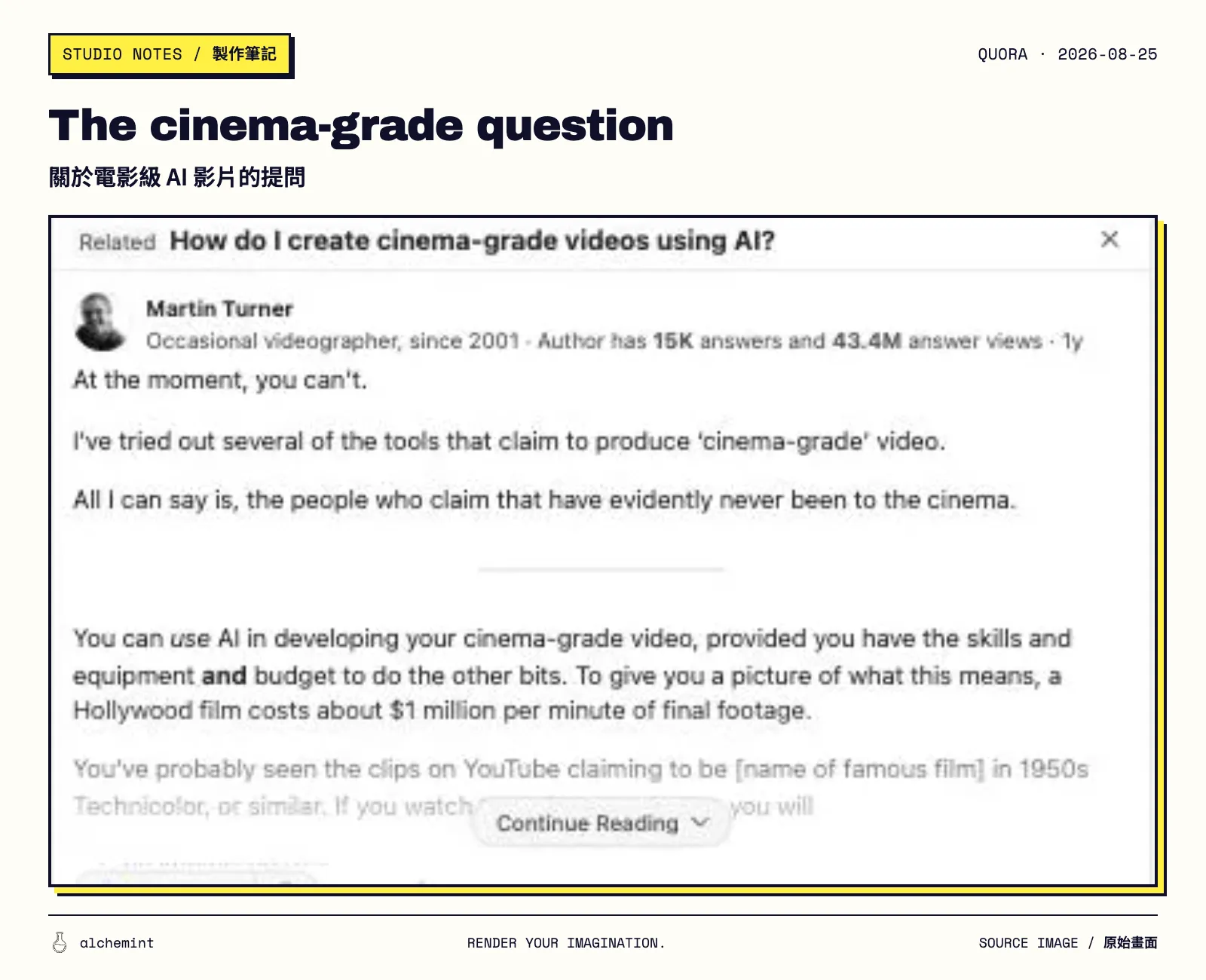
"You too can" and "you can't", on the same results page, one block apart.
A year ago: "you too can be an engineer"
Vibe coding got its name in February 2025. SE Ranking: 720 searches a month in August 2025, 110,000 in April 2026. DataForSEO: a peak of 165,000 in March 2026, 74,000 by July, down a third year on year; "vibe coding tools" fell from 3,600 to 1,000, down seventy-seven percent. On Google Trends the term peaked in the first week of March and sits at forty percent of that in August. "will AI replace software engineers": 2,400 a month in February, 720 in July. Even the replacement anxiety did not make it to summer.
Going up: "is vibe coding bad", plus eighty-three percent year on year. The four "People also ask" questions for "vibe coding" on 25 August 2026:
What is vibe coding actually? Why did vibe coding fail? Is vibe coding actually working? Can ChatGPT vibe code?
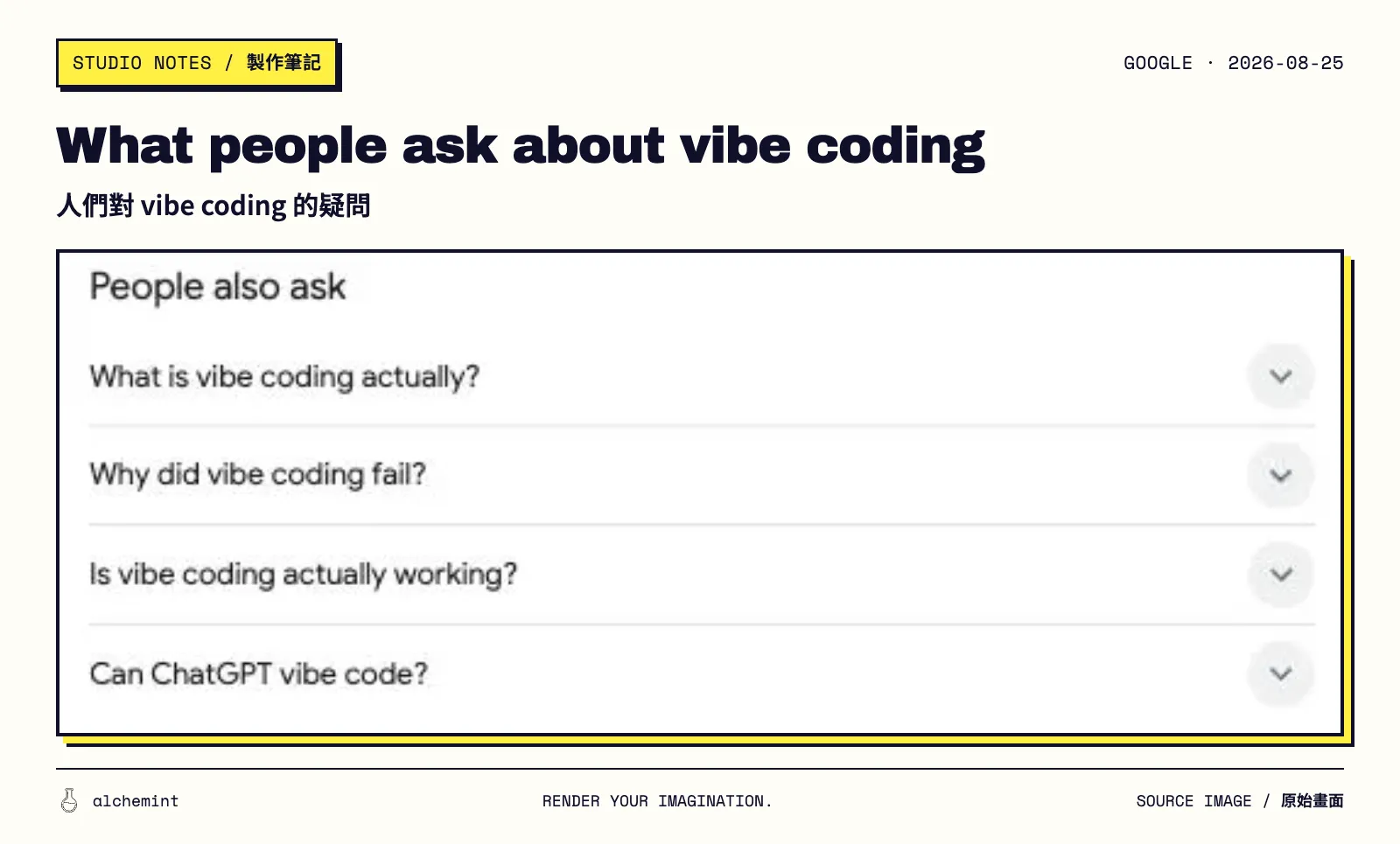
From "what is" to "why did it fail": eighteen months. The search engine wrote a buzzword's obituary out of its users' own questions.
The AI summary's definition of vibe coding: it "shifts your role from a syntax-writing programmer to a director or product manager who guides an AI agent through conversation".
Director. In 2025 the title went to programmers who do not write code. In 2026 it was reissued to directors who do not shoot. Marketing has exactly one title in stock.
One forum line from that week, posted on r/AI_Agents on 24 August: "Vibe coding feels faster right up until your project becomes big enough to remember its own history." The line holds for the buzzword itself. It ran fast until someone remembered what it had said a year earlier.
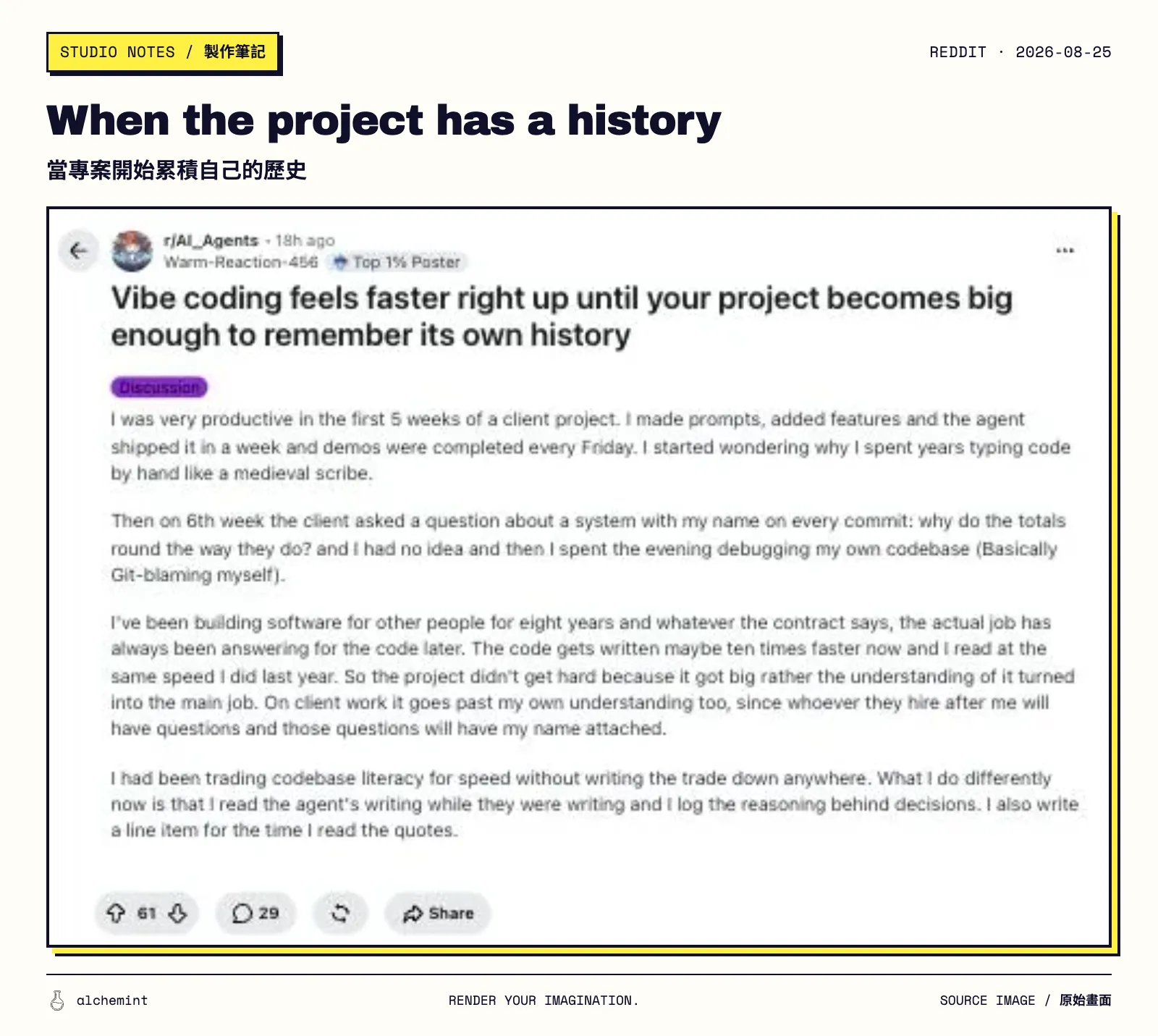
"You too can be an engineer" promised an identity and delivered runnable code, one piece at a time, with architecture, tests and maintenance left out. The part left out has a name: engineering. The function of the word "vibe" is to tell you to look away from it.
"Director" is a title issued by marketing
So where did the job go? Search "ai filmmaking". The AI summary defines it as "the practice of using artificial intelligence tools to generate, animate, edit, and enhance video content for movies", in three stages: pre-production (scripts, storyboards, character reference sheets), generation and animation, audio and post. The top ten: a course at 749 dollars, a tutorial, a community at 7 dollars a month, a platform that writes the workflow as "story, visuals, motion, sound, and assembly". Related searches: course, software, academy, jobs, Udemy. The query rising alongside it on Google Trends is a film director's name.
All five pages treat AI as a tool. "The creative vision stays human — the execution is AI." "Most people think AI filmmaking is just you clicking a button, and then a film comes out the other end. Those people couldn't be more wrong. You're going to need to put in all the effort you put into normal digital filmmaking." These pages say the opposite of the landing pages, and they are the ones charging: 749 dollars for a course in everything the landing pages say you do not need.
The "ai movie maker" landing pages carry headings that read Script-to-Movie, Storyboard Generator, Scene Generator, Review the blueprint, Direct each scene. One of them uses the ordinary generator as its foil: "Most AI movie generators produce short, disconnected video clips you stitch together elsewhere." Inside the category, someone is already pointing at the neighbours and saying: you sell parts.
The market is splitting, on the noun. Generator means clips; filmmaking and movie maker mean script to storyboard to scene. Nobody reads the preposition; people read the noun. The ad line "with AI you too can be a director" hangs on the generator side. The entire content of the director's job moved to the filmmaking side, priced at 749.
"ai film" and "ai movie", the two terms that look biggest, return the Wikipedia page, the review sites and the streaming links for the 2001 film of that name, plus the arguments about films made by AI: the ranking videos are all AI slop, a blockbuster used AI concept art and got shouted at. The category noun's public image is garbage. The craft noun's public image is a course. The title hangs on the garbage side.
We are selling the sentence too
This site's tutorial series is called "Create Video with AI". When we named it we knew "how to make AI video" had tens of times the volume. We kept the preposition, for semantic reasons: we wanted to write about a craft, and "AI video" sounds like a genre.
Then the keyword database we pay for filed "create video with AI" under "create video from video AI" and "make video with AI" under "make AI videos". The tool we bought moved our positioning term to the other side of the room, without telling us.
To be more honest still: this article is written for Google SEO. We would very much like to be indexed, thank you; the traffic comes from them and there is nothing we can do about that. So we wrote a piece complaining that it cannot read a preposition, laid out every paragraph so it can grab one easily, and put the sources and the verification date at the bottom to make quoting convenient.
We still use the word "director" too. We mean a way of thinking. The title belongs to marketing.
What the sentence leaves out, and what it costs
The two cases share a sentence shape: promise an identity (engineer, director), deliver a unit (a piece of code, a clip), leave out the craft (architecture and tests; script, storyboard, continuity). The part left out has a price tag, and the forum worked it out for beginners: the zero-dollar route juggles the daily free credits of four tools; the twenty-to-thirty-dollar route buys one image subscription and one video subscription; seventy-five to a hundred and fifty dollars per project; and one more line, "please do not buy a $500 "Master AI Filmmaking" course from a Twitter guru". Of nine tutorials, one teaches the storyboard.
Vibe coding took eighteen months to travel from "what is" to "why did it fail". Interest in "ai video" peaked in March 2026; it is now August. "ai slop" runs at 40,500 searches a month, up eighty-two percent year on year, peaking the same month. At this pace, "Why did AI video fail?" should show up under "People also ask" around next autumn. The "AI video generator" landing pages will still be there, the title will still be there, and the model list will carry a new set of names.
All search volumes and results pages in this article were checked on 25 August 2026 from SE Ranking, DataForSEO and Google Trends (United States, English). Where the two databases disagree on a term, both numbers are shown and none are averaged. Results pages change; check again before quoting. The two tool links are affiliate links: we paid for their data to write this, and we are putting the links back into the article to recover a little of what the preposition cost us.